Get free quotes from mobile imaging near you
Takes about a minute. Free, no obligation; providers reply to you directly.
A facility director I know — I’ll call her Linda — once told me she switched mobile X-ray vendors to save $18 per visit. Three months later, a chest film came back so underexposed that her attending physician couldn’t read the opacity he needed to rule out pneumonia. The patient ended up in an ambulance anyway. The “savings” evaporated in one transport bill, and Linda spent the next two weeks explaining herself to the family.
That story isn’t an outlier. It’s the cautionary tale the low-cost mobile imaging market doesn’t put in its sales deck.
The Short Version:Cheap mobile X-ray services are sometimes totally fine — and sometimes a liability disaster waiting to happen. The difference usually comes down to equipment tier, technologist credentials, and whether the provider has cut corners on regulatory compliance. Price alone tells you almost nothing.
Key Takeaways
- Mobile imaging already costs up to 85% less than hospital-based imaging — the “cheap vs. quality” comparison is within the mobile sector, not against hospitals
- Underexposed or motion-blurred images create retakes, delays, and diagnostic gaps that cost far more than the per-visit savings
- Technologist credentials, equipment spec, and turnaround time are the three variables that actually predict service quality
- A $40,000 equipment savings, when amortized over 5 years, is about $8,000/year — often wiped out by a handful of missed diagnoses or repeat exams
The Number That Sounds Great Until It Isn’t
Mobile imaging already looks like a miracle on a spreadsheet. A chest X-ray at a hospital runs around $3,300. A mobile provider doing the same study charges roughly $200. Abdominal ultrasound: $2,775 at a facility, $380 on-site. That gap is why SNF administrators and home health agencies started contracting with mobile imaging providers in the first place.
The villain here isn’t mobile imaging — it’s the second-order comparison people stop making. Once you’ve decided to go mobile, you start comparing mobile providers against each other. That’s where the real decisions happen, and where “cheap” stops being a neutral descriptor.
What Actually Varies Between Mobile Imaging Tiers
Here’s what most people miss: the equipment cost differential between budget and quality mobile systems is smaller than you’d think, but the operational consequences aren’t.
| Factor | Budget Mobile Provider | Quality Mobile Provider |
|---|---|---|
| Equipment tier | Entry-level portable, $20K–$30K | Mid-to-high portable DR, $35K–$45K+ |
| Image resolution | Variable; may underperform in difficult patients | Diagnostic-grade; consistent across body habitus |
| Technologist credential | May use lower-tier or uncertified staff | ARRT-licensed, same standard as hospital |
| Regulatory compliance | Possible shielding/control booth gaps | Full compliance documentation available |
| Retake rate | Higher; positioning and technique errors more common | Lower; fewer repeat exams |
| Turnaround time | Often slower; less infrastructure | Stat options typically available |
| Transmission method | Varies; sometimes CD or delayed upload | Direct PACS/EMR integration standard |
That $8,000 annual amortized difference in equipment cost? It evaporates fast when you’re eating retakes, handling delayed reads, or fielding complaints from radiologists about image quality.
The Three Things That Actually Go Wrong
I’ve heard versions of these stories enough times that they’ve stopped surprising me.
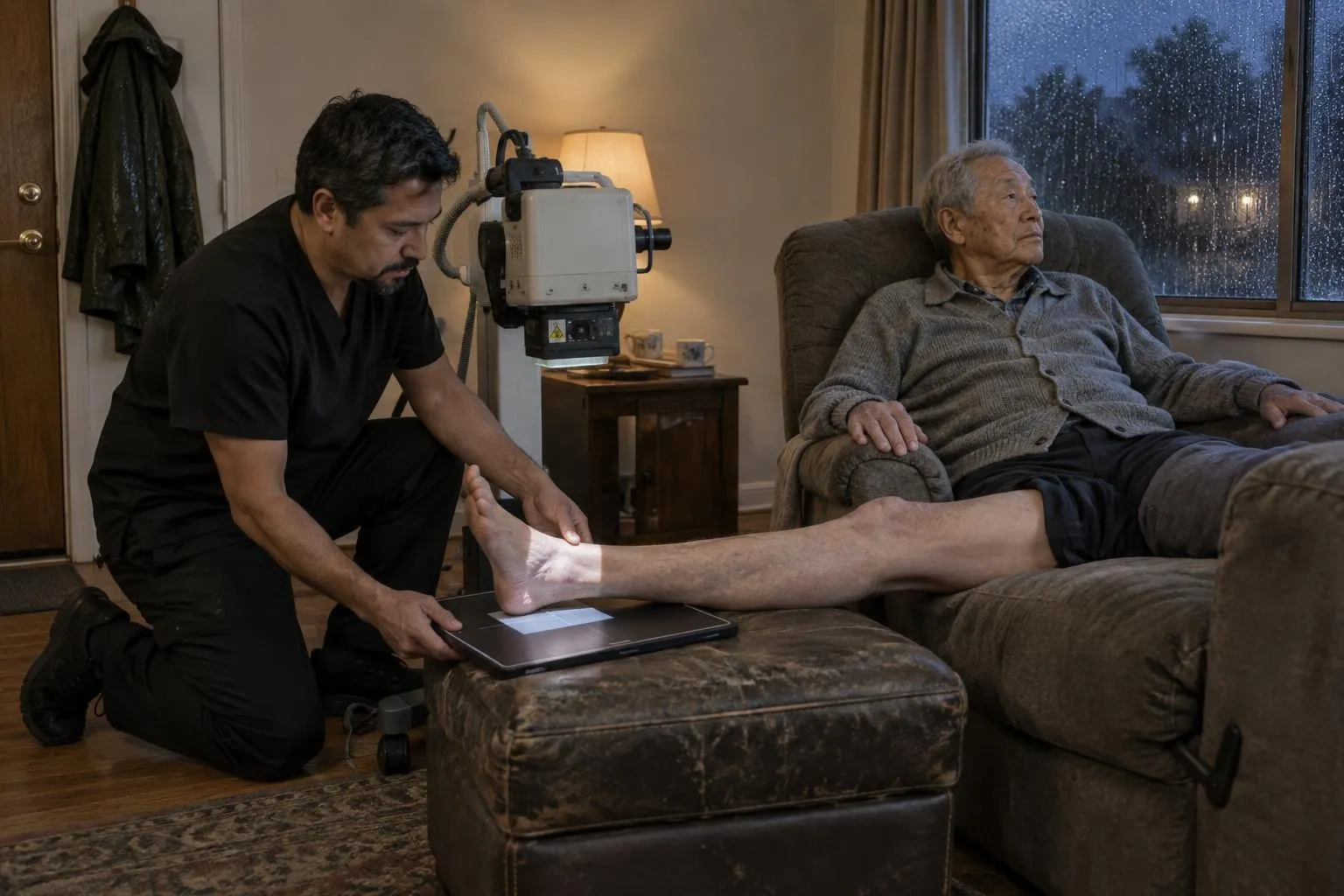
The unreadable film. Entry-level portable DR systems compromise on power output. In a bariatric patient or someone with significant pleural effusion, an underpowered unit produces a film where the radiologist is interpreting shadows of shadows. The read comes back “limited study, clinical correlation advised” — which is polite physician-speak for “I can’t actually tell you anything useful.”
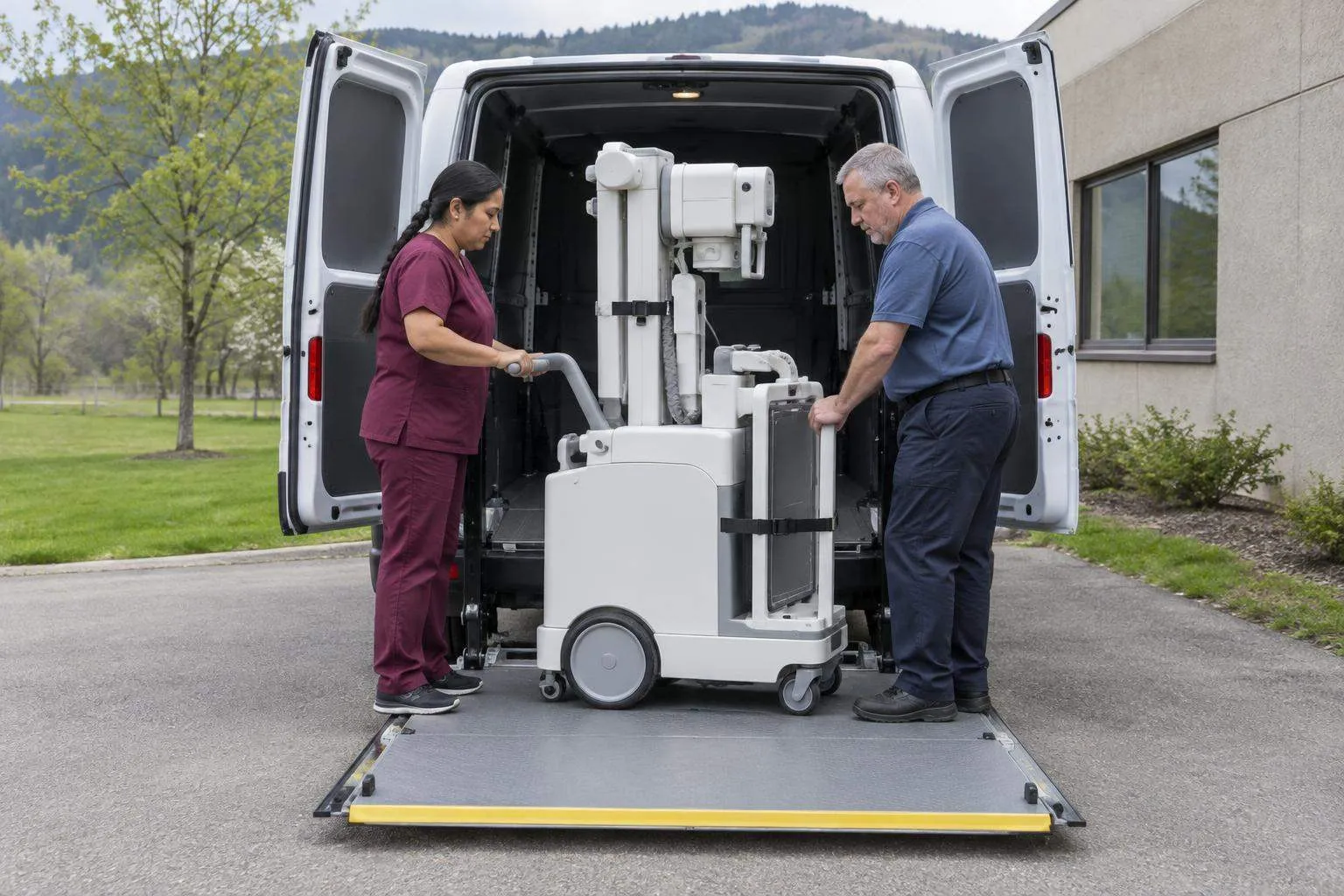
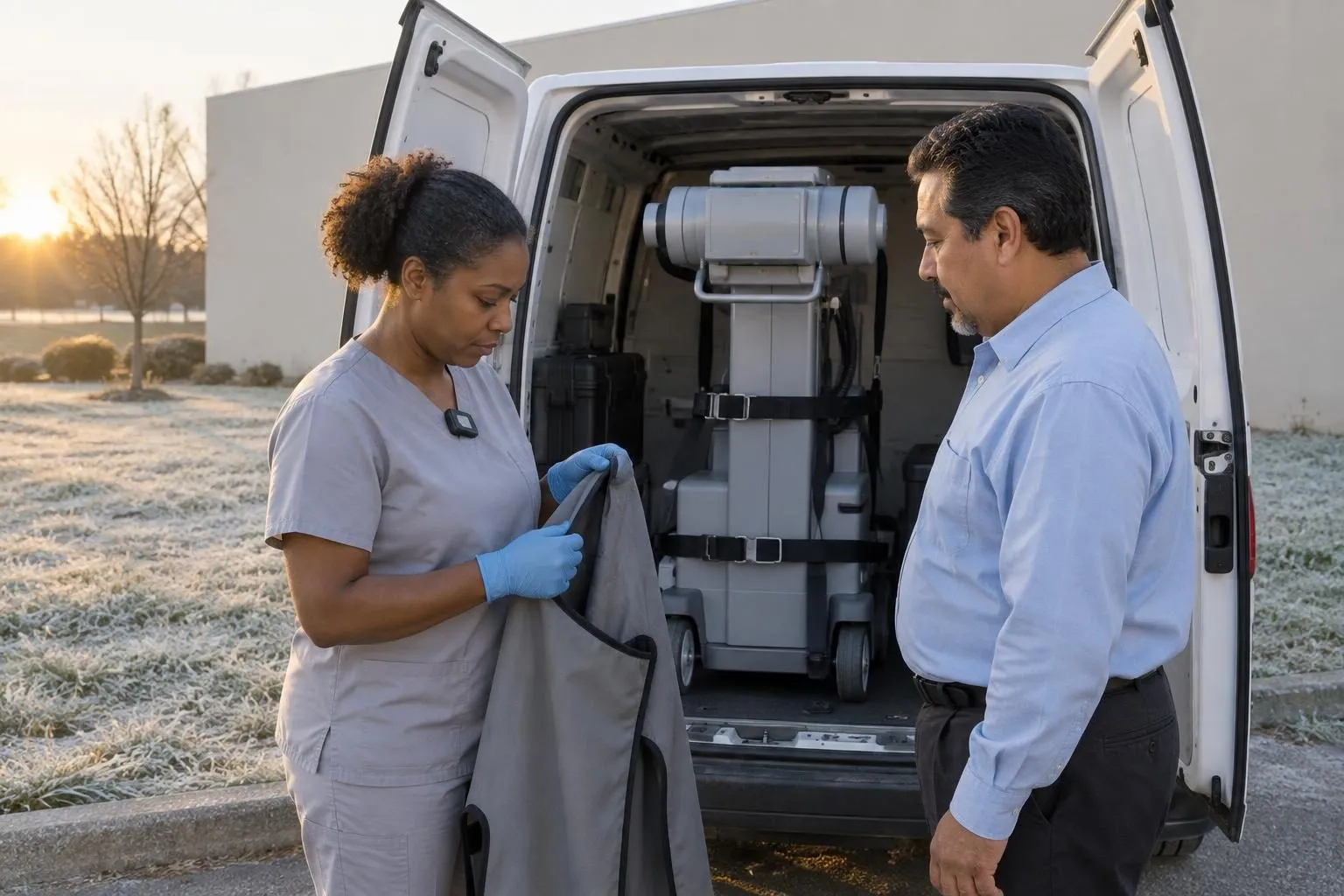
The compliance gap. Cheaper portable configurations sometimes skip adequate shielding documentation or don’t carry the regulatory paperwork your facility needs on file. One state survey, one accreditation visit, and suddenly your mobile imaging contract is a liability item instead of a convenience.
The missing technologist. In-home and SNF mobile X-ray requires the same credential level as hospital-based work — ARRT licensure, state certification, documented radiation safety training. Budget providers sometimes staff with technologists who meet the minimum bar on paper but haven’t maintained the competency standards that show up under pressure. A positioning error in a confused, non-weight-bearing resident doesn’t just mean a blurry film. It means a missed fracture.
Reality Check:The research is clear that modern mobile X-ray can produce images “comparable to stationary machines” — but that’s high-end mobile DR, not the bottom of the market. Don’t let the category-level accuracy claim substitute for asking about specific equipment specs.
When the Cheaper Option Is Actually Fine
I’ll be honest: not every mobile imaging scenario demands premium pricing.
Routine follow-up chest films on a stable COPD patient in a skilled nursing facility? A competent mid-tier provider with solid technologist credentials is probably adequate. Scheduled, low-complexity imaging where the clinical stakes are low and turnaround isn’t urgent — that’s the use case where cost optimization makes sense.
The calculus changes fast when you’re dealing with:
- Acute presentations (suspected pneumonia, possible fracture)
- Larger patients where image penetration is non-trivial
- Patients with cognitive impairment who require skilled positioning
- Any situation where a stat read influences same-day clinical decisions
Pro Tip:Ask your prospective provider for their retake rate and their policy on non-diagnostic images. A quality provider tracks this. A budget provider usually doesn’t, which is itself the answer.
How to Actually Evaluate a Mobile Imaging Vendor
The evaluation criteria that matter aren’t the ones vendors lead with.
Ask about the equipment model by name. Get the specific unit they’re deploying to your facility. Look up its DR system specs — detector size, generator output, and whether it has automatic exposure control. A provider who can’t answer this question specifically is a provider who doesn’t want you to know.
Verify technologist credentials independently. ARRT verification is a 30-second lookup at arrt.org. Do it. This isn’t distrust — it’s the same due diligence you’d apply to any clinical contractor.
Request a sample radiology report. Not a testimonial. An actual de-identified report from a completed study. You’ll learn more from the radiologist’s interpretation language than from any sales conversation.
Understand their escalation protocol. What happens when a study is non-diagnostic? Who calls your attending? How fast? The answer to this question separates operators from order-takers.
See the complete guide to mobile X-ray services for a full breakdown of what to expect from a credentialed provider and how the service model works end-to-end.
Practical Bottom Line
Cheap mobile X-ray isn’t automatically bad. Expensive mobile X-ray isn’t automatically good. The price is a weak proxy for what you actually care about: diagnostic accuracy, regulatory safety, and a technologist who can handle your patient population.
Before you sign a contract based on per-visit rate:
- Get the equipment specs in writing. Portable DR system model, generator output, detector specs.
- Verify every technologist’s ARRT license. Non-negotiable.
- Ask for retake rate data. If they don’t track it, walk.
- Understand turnaround SLAs by study type. Routine vs. stat should have different answers.
- Price your real cost per diagnostic study — not per visit. Factor in retakes, delays, and transport events that happen because a study wasn’t usable.
Linda’s $18-per-visit savings cost her roughly $2,400 in transport costs, several hours of staff time, and a family conversation she’d rather forget. The math on cutting corners in mobile imaging almost never works out the way the spreadsheet suggests.
Done reading? Get quotes from mobile X-ray services near you.
Takes about a minute. Free, no obligation; providers reply to you directly.
Popular cities:
Nick built this directory to help SNF administrators and home health agencies find credentialed mobile imaging providers without wading through services that lack proper ARRT licensure or ACR accreditation — compliance gaps he uncovered when researching portable imaging options for a family member in long-term care.