Get free quotes from mobile imaging near you
Takes about a minute. Free, no obligation; providers reply to you directly.
It’s the first cold week of October, and your charge nurse tells you two residents on the same hall have a new cough and low-grade fever. The physician wants a chest film today. Your mobile X-ray vendor’s last email said “we’ll get to you as soon as we can.” You’ve got no idea what that means on a Friday afternoon.
That’s the moment this article is for. Better to have the answer before it happens.
The Short Version: Respiratory season (fall through winter) pushes chest imaging demand up in nursing homes and assisted living, and mobile X-ray lets you work up suspected pneumonia at the bedside instead of sending a frail resident to the ED. Sign or renegotiate your mobile imaging contract now, and put turnaround, STAT coverage and billing in writing before the surge.
Key Takeaways
- Chest X-ray is the most common portable radiography exam, and pneumonia workups are a core use in long-term care.
- Mobile imaging quality is comparable to hospital-based imaging in a systematic review, but it won’t guarantee fewer hospitalizations.
- Price a mobile chest X-ray at roughly $100-$250 per visit for a single patient, less per person on a scheduled route.
- The contract questions that matter are STAT response, radiologist turnaround, route capacity and who bills what.
Why Respiratory Season Changes Your Imaging Volume
Here’s what most people miss: nobody publishes a clean month-by-month national curve of mobile X-ray demand. I looked. What the sources support is the logic. Pneumonia, influenza and other acute respiratory infections rise in fall and winter, and a chest film is how clinicians confirm suspected pneumonia.
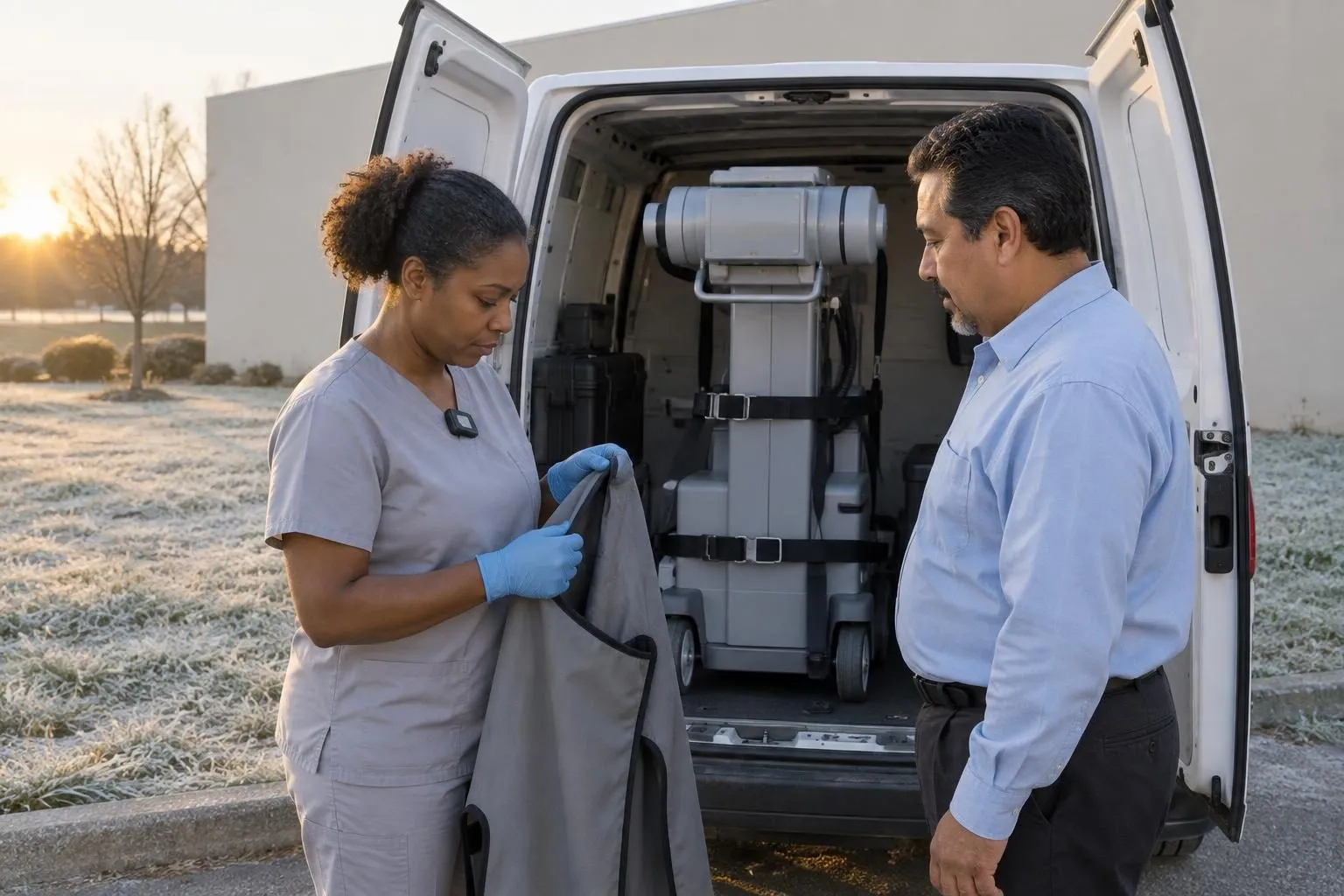
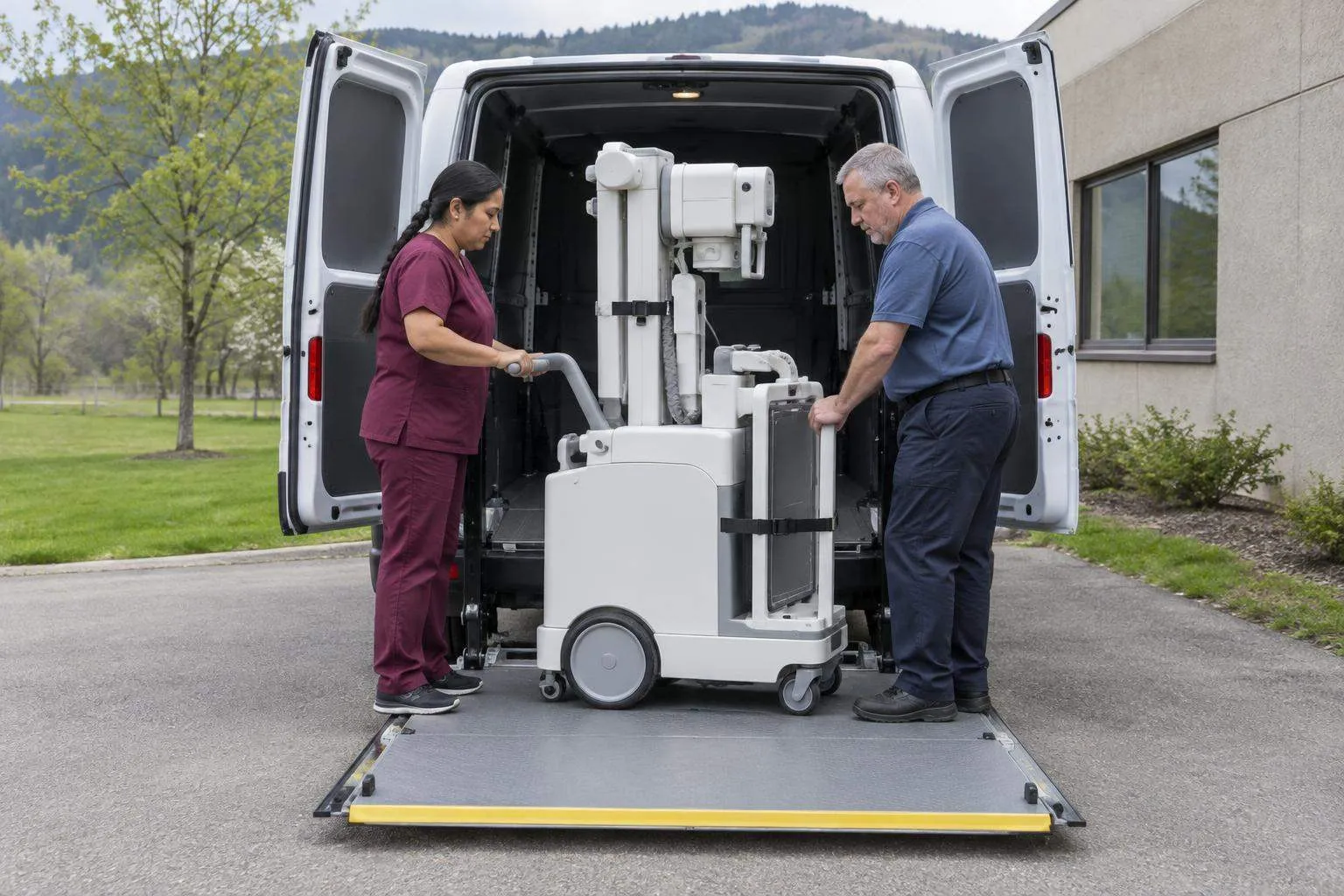
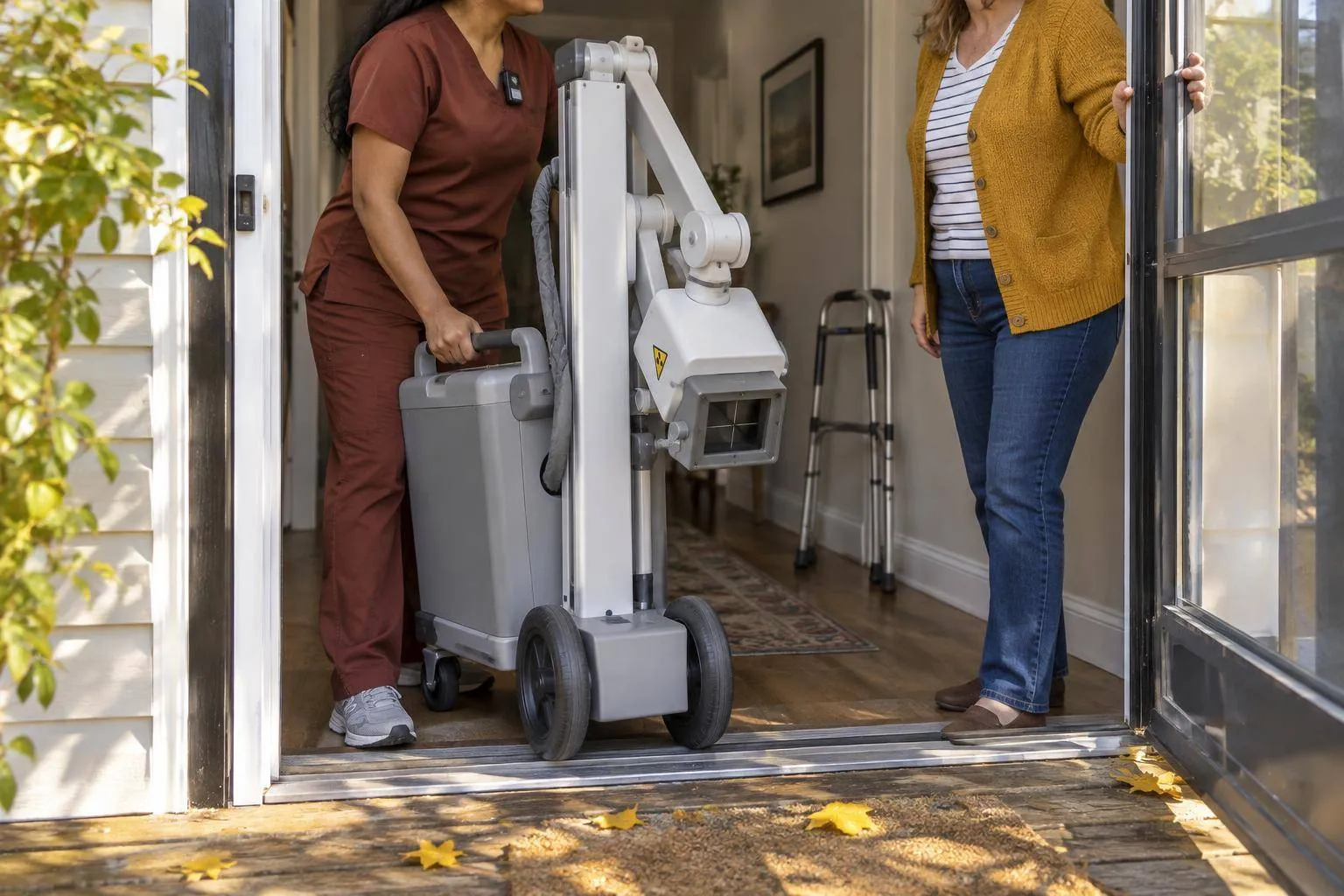
Mobile radiography in nursing homes means small, lightweight digital equipment brought by vehicle and used in the resident’s room with your staff’s help. A systematic review of mobile radiography in nursing homes found quality comparable to hospital-based imaging, with clear potential benefits for residents.
I won’t oversell it either.
Reality Check: A Danish randomized trial found mobile X-ray did not significantly reduce hospitalizations compared with hospital X-ray for fragile patients. Mobile imaging can make pneumonia diagnosis feasible in the building, but clinicians still need to trust clinical signs before ordering the exam. It’s a faster workup, not a promise nobody goes to the hospital.
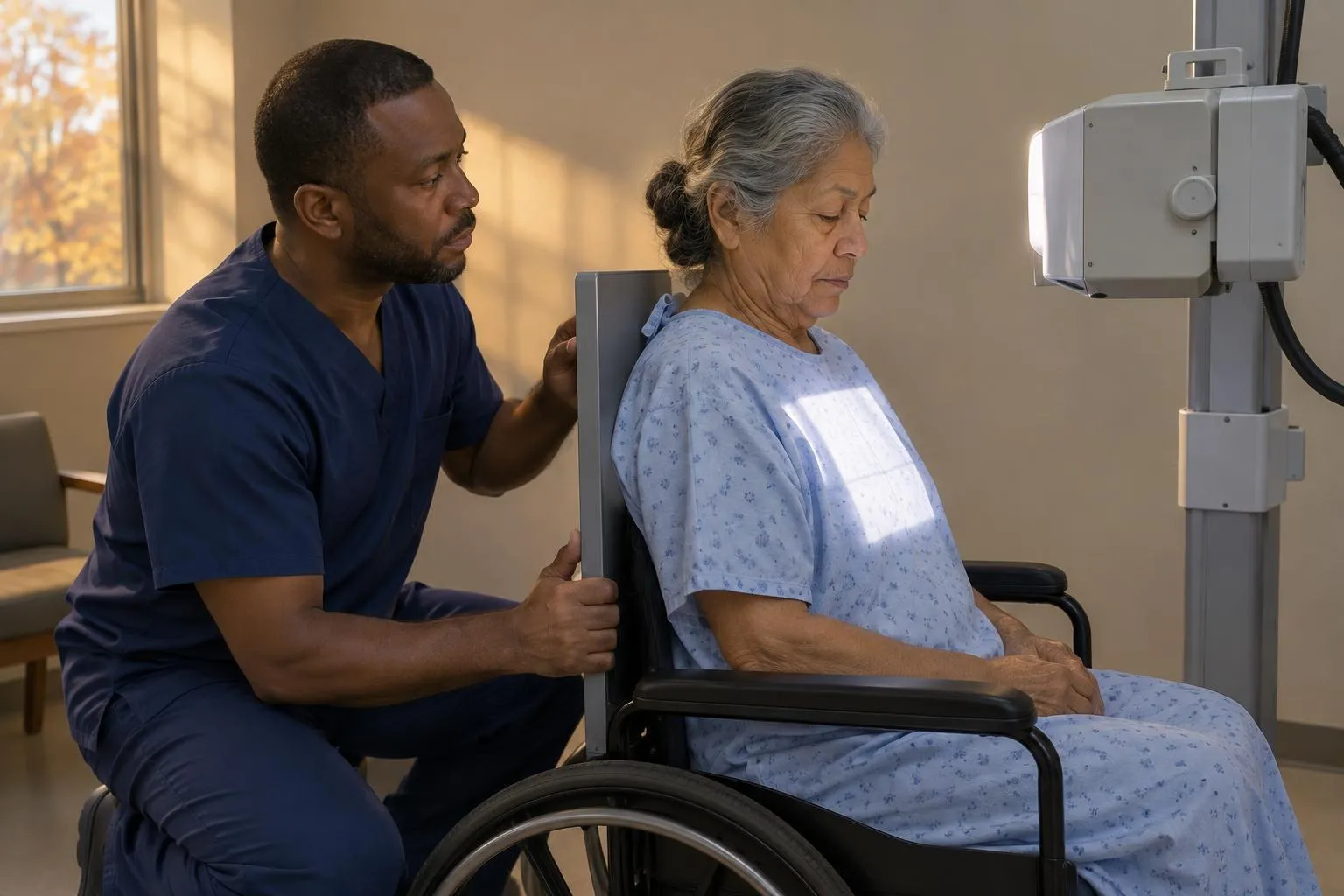
Bedside films also have limits. Long-term-care respiratory training material points out that many residents can’t sit up or stay stable, prior films may be unavailable, and radiologist agreement on infiltrate can be modest (k = 0.54). Ask your provider how they handle positioning and comparison films.
Regional Timing: What the Evidence Does and Doesn’t Say
I can’t hand you a state-by-state calendar, because the gathered sources don’t support one. Flu and RSV activity varies year to year and place to place. So use your own signals: your facility’s respiratory-illness log and your local health department’s surveillance reports.
What I can say is where provider supply sits. In our directory, Texas, California and Michigan have the most listed providers. If you’re in a big metro, start with the city pages for New York, Los Angeles or Chicago and compare who covers your zip.
What to Line Up, and When
| When | What to do |
|---|---|
| Now (October) | Confirm your current vendor’s STAT coverage and route capacity. If they can’t commit in writing, request quotes from two others. |
| Before the first outbreak | Agree on order workflow, who reviews results, and who bills the exam. Give your nurses the vendor’s dispatch number. |
| During the surge | Track actual time from order to arrival and from exam to final read. Keep the numbers. |
| After the season | Review those numbers against the contract and renegotiate with data. |
What It Costs
The competitor pages mostly skip pricing, so here it is. A 2026 rate guide puts a mobile chest X-ray at $100-$250 per visit for a single patient, single exam. That breaks down roughly as:
| Component | Typical range |
|---|---|
| Transportation | $75-$150 |
| Technical component | $30-$85 |
| Professional interpretation | $20-$50 |
| Setup (equipment stored on-site) | $15-$25 |
| Scheduled multi-patient route, per patient | $50-$120 (SNFs at the low end) |
| Assisted living, per patient | $75-$150 |
That guide comes from a directory-affiliated vendor source, so treat it as a market range rather than an audited average. For the full breakdown, see how much mobile X-ray service costs.
Why the split matters: mobile suppliers are paid separately for transport, setup, technical work and interpretation under CMS reimbursement rules. Ask which components each invoice line covers and who bills Medicare. Some providers state on their own sites that STAT is included at no extra charge. Others bill an after-hours premium. Get yours in writing.
Pro Tip: Season-proof your contract with three numbers: maximum hours from order to bedside for STAT, maximum hours from exam to final radiologist read, and the after-hours rate. If the vendor won’t write numbers down, you’ve learned something.
Vetting a Provider Before the Surge
Check these before you sign:
- Technologist credential: ARRT RT(R) is the radiography credential. Ask for it by name, not just “certified.”
- Who reads the films: ask whether a board-certified radiologist interprets and how fast.
- Image quality for bedside films: ask how they handle residents who can’t sit up.
- Capacity: ask what happens when three facilities call at once.
- Billing: ask for itemized transport, setup, technical and interpretation lines.
Marketing pages for emergency mobile imaging love “fast” and “infection control,” but they rarely show prices or outcome data. Make the vendor show you.
By the Numbers
From BedsideImaging directory data (see the full figures):
- Verified providers listed: 87
- States covered: 26
- Most providers: TX (13), CA (8), MI (7)
- ARRT RT(R) listed: 7 (8%)
- ARDMS Registered: 6 (7%)
- Board-certified radiologists listed: 4 (5%)
Those credentials appear on a minority of profiles, so don’t assume. Verify directly.
Practical Bottom Line
- This week, ask your current vendor for written STAT and turnaround terms.
- Get two backup quotes, using the price ranges above as your yardstick.
- Confirm credentials and radiologist read process.
- Brief nursing staff on how to order and what to prepare at the bedside.
- Track real response times all season, then renegotiate.
For the bigger picture on choosing and contracting, read The Complete Guide to Mobile X-Ray Services.
The surge won’t wait for your contract. Line it up before the cough starts.
Done reading? Get quotes from mobile X-ray services near you.
Takes about a minute. Free, no obligation; providers reply to you directly.
Popular cities:
Nick built this directory to help SNF administrators and home health agencies find credentialed mobile imaging providers without wading through services that lack proper ARRT licensure or ACR accreditation — compliance gaps he uncovered when researching portable imaging options for a family member in long-term care.